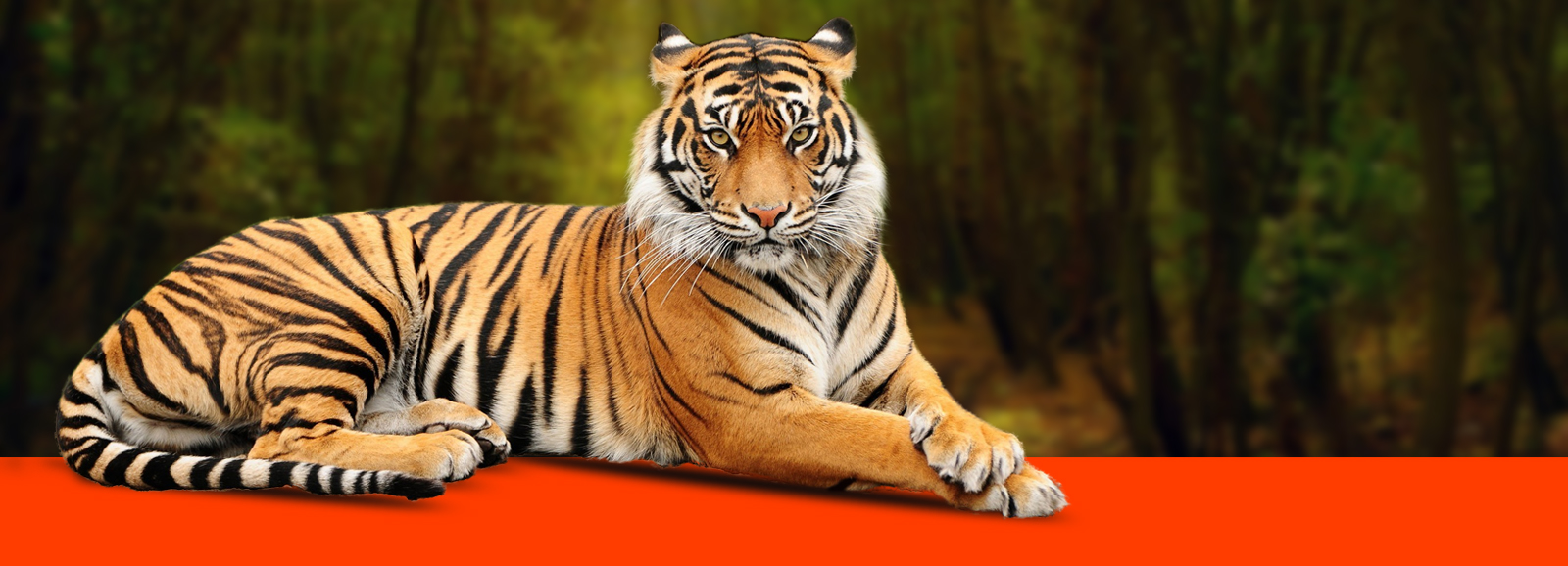
Corbett National Park is located in the Ramganga Valley near the Himalayas foothills. It is nestled cozily in the hilly districts of Nainital, Almora and Pauri Garhwal. At present the Tiger Reserve covers an area of 1318.54 sq.km and includes within it the Corbett National Park, Sonanadi Wildlife sanctuary and Kalagarh sanctuary. There are approximately 140 tigers still present in the park. This hunting ground was protected by Major Ramsey who banned farming and cattle grazing in 1858. This protection was extended and strengthened in 1879 when it was declared reserve forest. In the early 20th century it was made as India's First National Park by Malcolm Hailey. It was known as Hailey National Park and Major James E Corbett was one of the key consultants for creating and protecting the park. It was renamed as Corbett National Park in his honor in 1957. In 1973 it was the first park to come under Project Tiger. The park has mixed deciduous forests of Sal and Sheesham trees and the lantana bush and open grass pastures known as chaurs. It is grazing ground for park's wild elephants. The park is home to around 580 bird species, 50 mammals and at least 25 reptile species. Traveling inside the park by jeep can lead to tiger spotting which an experienced guide can locate.
Area: 1318.54 sq.km
Core Area: 520.82 sq.km
Elevation: 600- 1100 mts.above mean sea level
By Air: Nearest rail head: RamNagar. It is easily accessed from Delhi
By Road: RamNagar is approx 280 km by road from Delhi via Moradabad.There are regular buses to RamNagar from Delhi bus terminal.
The best time to visit is from mid November and April. The tiger spotting occur from April to mid-June. For migratory birds visit from mid December to March is ideal. The other animals like deer, elephants, crocodiles and wild boars can be seen whole year.

© 2020 Tigers of India
Powered by Concern Infotech Pvt.Ltd