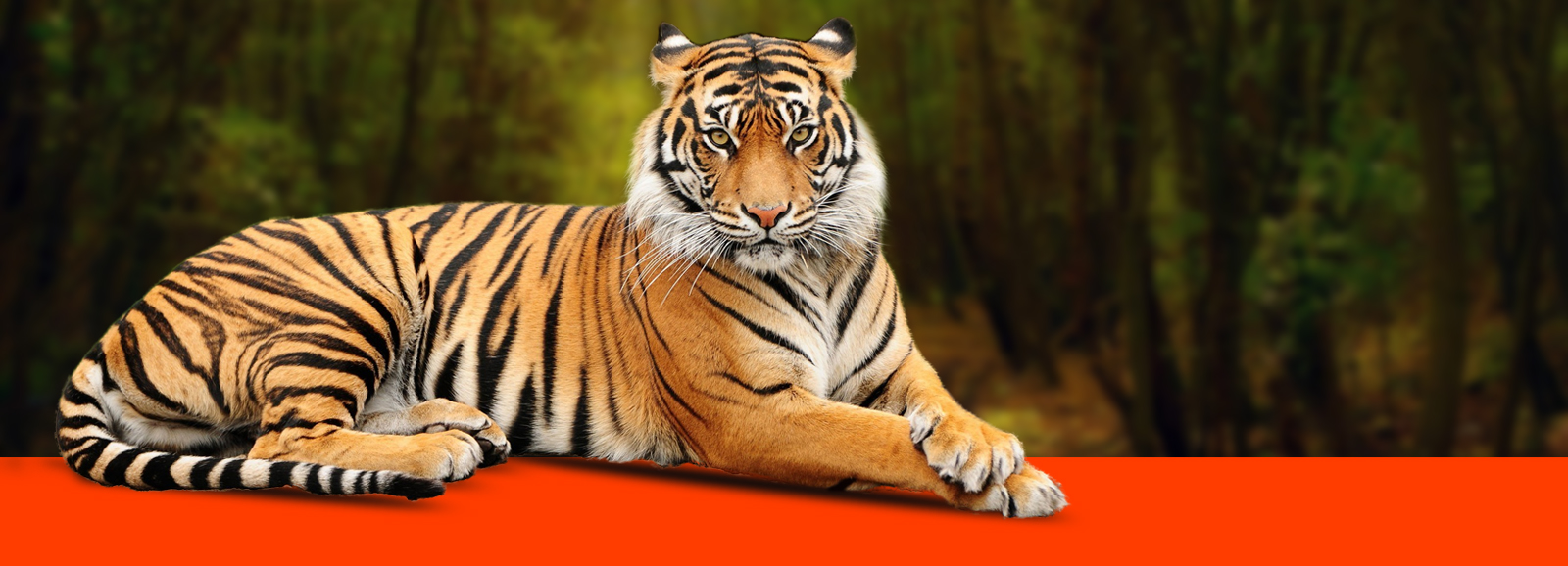
The eastern-most Tiger Reserve in the country, Namdapha National Park lies in the Eastern Himalayas, adjacent to the Myanmar border in the North-East. An unpredictable place which is why a visit there is an experience of a life-time.Namdapha Tiger Reserve is spread almost on 2000 sq km of mainly uninhabited tropical forest and contains habitats from riverbanks to the snow-covered peaks of Daphabum.It is home to all the four species of large cats- the tiger, the leopard, the clouded leopard and the snow leopard. It started as a Reserve Forest and was declared a wildlife sanctuary in 1972.In 1983 it was declared a National park and a tiger reserve under the Project Tiger scheme.
Some tribes Lisus, Singphos, Khamptis and Tangsas live in the vicinity of the reserve. At least 90 mammal species including tiger, leopard, wild boar, wild dog, macaque, and gibbon are found in the park. The leaf deer world's smallest deer that stands just 20 inches at the shoulder and weighs about 12kg is the recent discovery in the region. At least 400 bird species including white winged wood duck, Blyth's kingfisher, Austen's spotted babbler, wedge-billed wren, rusty-bellied short wing, white -tailed eagle and scarlet finch are most prominent. The area is famous for snakes and amphibians with over 70 species.
An Inner Line Permit is required for all Indians to enter the state. Foreigners require Restricted Area Permit which can be obtained from Indian Embassy/consulates abroad, the Home Ministry or the Home Commissioner, Government of Arunchal Pradesh.
The most common entry to the park is from the M'pen Checkpost about 11 km away.The tourist accommodation are located across the river from each other at Deban 28 km from Miao.Campsites are established at Halidibari, Hornbill, Bulbulia and Rani Jheel inside. The other access point is through the Lisu Village at Gandhigram.
The driest months are between October and February. November is said to be the month with the least number of rainy days.
By Air:
Dibrugarh is the nearest airport. Daily flights offer connections from all the metros via Guwahati.
By Rail:
Tinsukia is the nearest station. Train connections are from Delhi and NJP.
By Road:
Buses run only to Miao .One can take private jeeps and taxis also.

© 2020 Tigers of India
Powered by Concern Infotech Pvt.Ltd